Concrete, Pavers, or Asphalt? Choosing a Driveway Surface for a Bay Area Lot
The standard comparison charts ignore the things that decide it here: slopes, stormwater rules, and a climate with no freeze-thaw. An honest local guide to the three surfaces — including when we’d point you away from concrete.
Every driveway comparison article gives you the same table, and it’s not wrong: the concrete industry’s Concrete Network puts asphalt at $3–$6 per square foot installed with a 10–15 year life before replacement, and plain concrete at $5–$8 (decorative $8–$21) lasting decades. Installed pavers typically run two to four times the cost of plain concrete depending on the stone, with a long life but ongoing upkeep. What those tables leave out is that the deciding factors in the Bay Area usually aren’t in the table at all. Here’s the local version — including the cases where concrete isn’t the answer.
Start with your slope
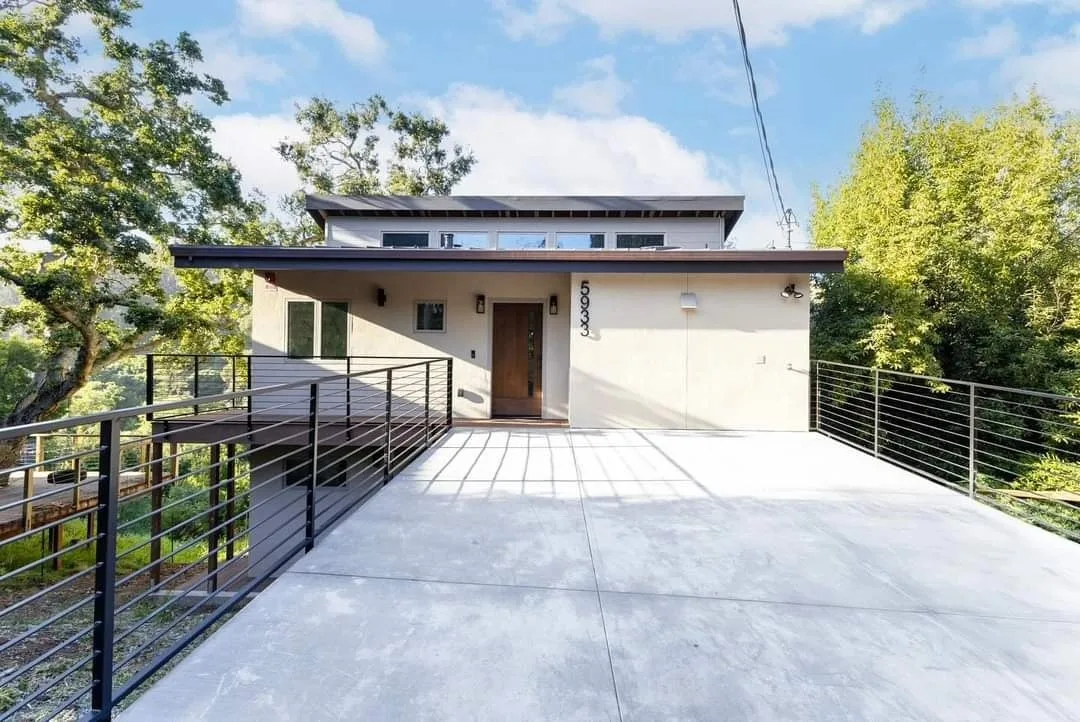
Flat-lot advice dies quickly in the Berkeley and Oakland hills. On a steep driveway, asphalt softens in hot weather and can deform under parked wheels; pavers rely on an edge-restrained sand bed that gravity and runoff work against year after year. A reinforced concrete driveway with a broom finish for traction — scored or with a heavy texture on the steepest runs — is the surface that handles grade with the least drama, which is why it’s the default on hillside lots. If your driveway is the reason you’re reading this and your lot is steep, the slope has mostly made the decision for you.
Check your city’s stormwater rules before you fall in love
Bay Area cities regulate impervious surface — hard area that sheds rain into the storm system instead of letting it soak. Under the region’s municipal stormwater permit, projects that add or replace enough hard surface can trigger drainage requirements, and several cities steer or require permeable surfaces for portions of new driveways. The thresholds and enforcement vary by city, so a ten-minute call to your planning counter (Richmond, Berkeley, Oakland, and San Francisco all differ) is worth making before you commit to a design. This is the one factor that can genuinely rule concrete out — and where permeable pavers, a ribbon driveway (two concrete strips with planting between), or pervious sections earn their keep.
Our climate quietly changes the math
Most national driveway advice is written for places with freezing winters, where freeze-thaw cycles crack concrete and favor asphalt’s flexibility. The Bay Area barely freezes — concrete’s main climate enemy here simply doesn’t apply. Meanwhile asphalt’s maintenance schedule (sealing every few years, softening in inland heat in places like Danville and Pleasanton) still does. That’s a big part of why concrete dominates Bay Area residential driveways: the climate removes its biggest weakness and keeps asphalt’s.
The honest comparison, locally weighted
- Concrete — best all-around here: handles slopes, lowest ongoing maintenance, 25–30+ year life, takes color and score patterns well. Weaknesses: higher upfront cost than asphalt, and repairs show unless done thoughtfully.
- Pavers — best where stormwater rules demand permeability or the design calls for it; repairable piece by piece. Weaknesses: highest cost per the 2026 guides, edge and bedding upkeep, and a poor fit on steep grades.
- Asphalt — best for long, flat, budget-driven runs. Weaknesses: resealing every few years, softening in heat, shortest life, and it never reads as a finished surface next to a nice house.
What we tell homeowners
We pour concrete for a living, so weigh this accordingly — but the advice is the same we give on driveways we walk: on a slope, concrete; on a flat lot with strict runoff rules, permeable pavers or a concrete ribbon design; on a long rural flat run where budget rules, asphalt is defensible. And whatever surface you choose, the base preparation under it matters more than the brand of the surface — a driveway is only as good as the compacted base and drainage beneath it. If concrete is the answer on your lot, here’s what a driveway replacement actually involves — and if you want a real recommendation for your specific lot, that’s a free site walk.
Common questions
What driveway surface lasts longest on a steep Bay Area lot?
Reinforced concrete with a broom or heavily textured finish. Asphalt deforms on hot steep grades and pavers migrate on slopes over time. On serious grades, texture and scoring for traction — and getting water off the surface — matter as much as the material.
Will my city limit how much concrete I can pour?
Possibly. Bay Area cities regulate impervious surface under the regional stormwater permit, and larger new hard surfaces can trigger drainage requirements or permeable-surface rules. Thresholds vary by city — call the planning counter before designing, or ask us and we’ll flag it during the estimate.
Is stamped or colored concrete worth it compared to pavers?
If you want pattern and color with slope tolerance and low upkeep, decorative concrete usually wins here. If you need permeability for stormwater rules, or want piece-by-piece repairability, pavers win. Cost-wise they overlap: decorative concrete runs $8–$21 per square foot per Concrete Network, and installed pavers typically land in or above that band depending on the stone.
Sources & further reading
Planning a concrete project?
We offer free estimates across the San Francisco Bay Area. Tell us what you’re working on and we’ll walk the site with you.
Request an estimate