Danville sits in the San Ramon Valley, on the far side of the hills from our Richmond yard, and we are out there regularly. Lots are larger here, houses are newer than in Berkeley or Oakland, and the concrete jobs are bigger in area — long driveways, wide patios, and detached ADUs with room to build properly.
It also has the most difficult soil of the four cities in this guide, and almost every concrete decision in Danville comes back to that.
- Licensed C-8 · CSLB #1020281
- San Ramon Valley specialists
- Free on-site estimates
Concrete in Danville, at a glance
- Permits
- Town of Danville Building Division for addresses inside town limits. Unincorporated areas nearby — Diablo, Alamo — permit through Contra Costa County instead.
- Ground
- Highly expansive clay through the valley floor, which swells in the wet season and shrinks in the dry; steeper hillside lots toward Diablo, Blackhawk and the Mount Diablo foothills.
- Seismic
- The Calaveras Fault runs through the San Ramon Valley, east of the Hayward system. Ground shaking, rather than surface rupture, drives most residential design here.
- Housing stock
- Largely 1970s onward — subdivisions on generous lots, plus semi-rural properties toward Diablo and Tassajara with long driveways and outbuildings.
Danville sits in Contra Costa County. Local facts last reviewed August 28, 2026.
Expansive clay is the Danville problem
The valley floor here is expansive clay. It absorbs water in winter and swells; it dries out in summer and shrinks. Over a year the ground under your slab moves, and it does not move evenly — the edges, where water gets in and dries out fastest, move more than the middle.
This is why a Danville patio or driveway that was fine for three years can open up in a wet winter. The concrete is rarely what failed. The ground under it moved.
None of the fixes are complicated: a properly prepared and compacted base, adequate slab thickness, reinforcement placed at the right height rather than dropped on the ground, control joints cut at sensible spacing, and drainage that carries water away from the slab edge instead of letting it pool there. For structures, that often means going deeper — footings below the active zone, or a stiffened foundation designed for the movement. We go into the regional picture in Bay Area soil, slopes and seismic.
Big lots mean big flatwork
Danville properties tend to have room, and that changes the jobs. Driveways are long, sometimes with a turnaround or a second approach to a detached garage. Patios are large enough that joint layout becomes a design decision rather than an afterthought. Some properties want a landing pad, a pad for equipment, or a poured apron where a gravel drive meets the road.
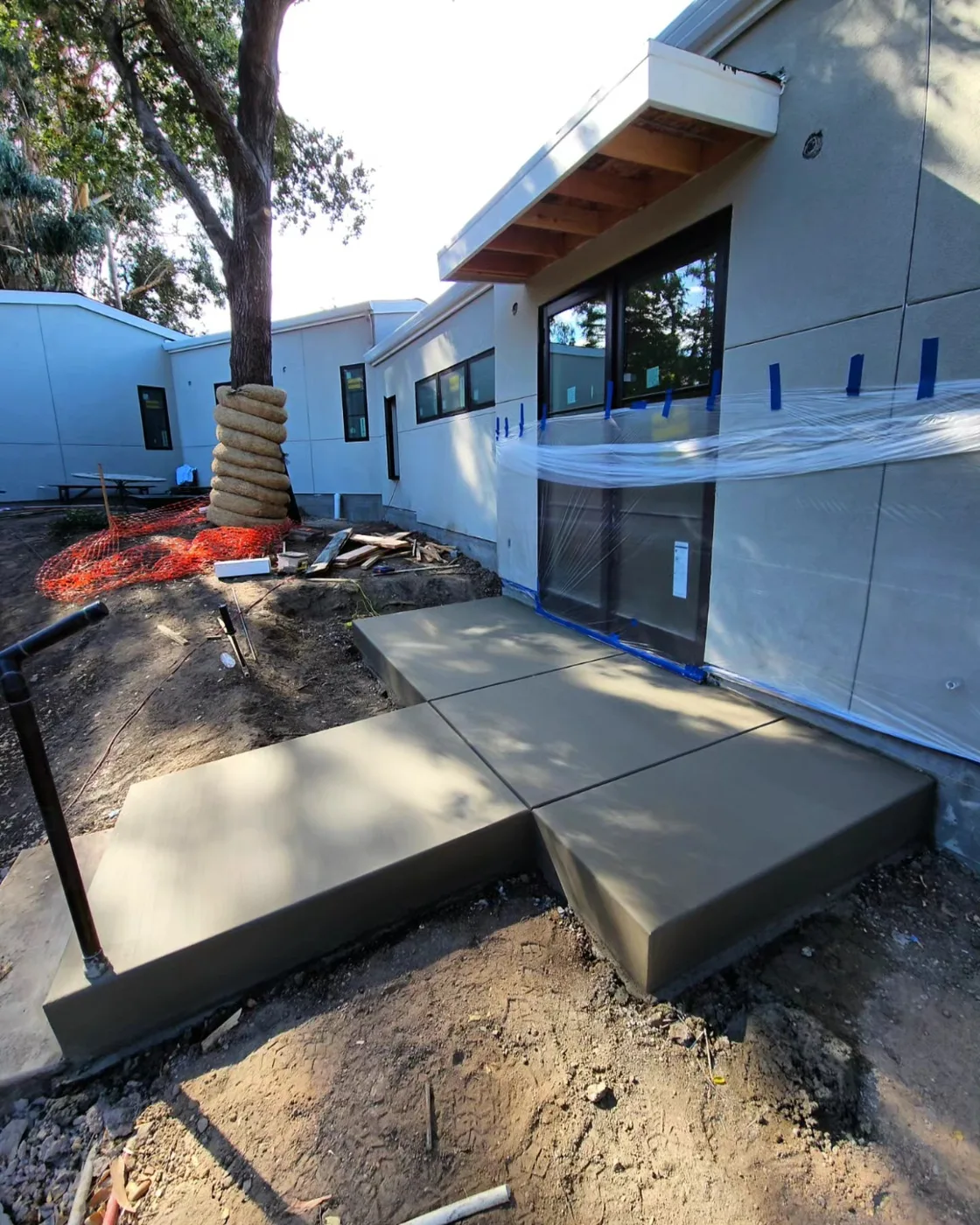
Large pours on expansive clay make joint spacing and reinforcement more important, not less — a big slab has more room to move. On our Danville landing pad and curb drainage project the drainage detail was the whole job, not something added at the end.
ADUs on San Ramon Valley lots
Danville ADUs are a different build from Berkeley ADUs. There is usually real access — a gate wide enough for equipment, a side yard a truck can reach — so the logistics are easier. The engineering is harder, because the foundation has to cope with clay that moves seasonally under a permanent structure.
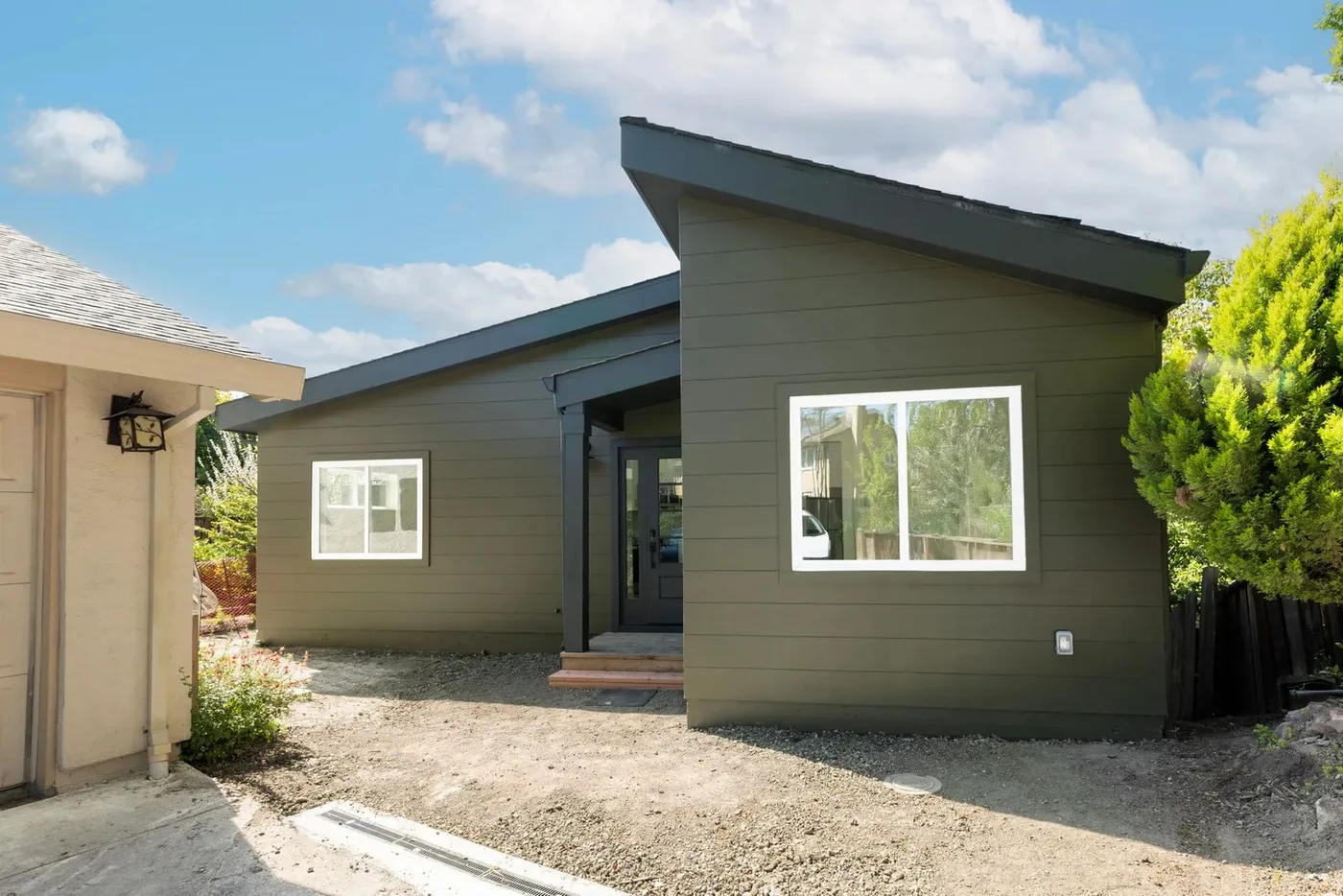
We built an ADU foundation in Danville and have poured ADU foundations across the valley and its neighbors in Alamo, Pleasant Hill and Pleasanton. See our foundations page for how we approach them.
Walls, sound walls and the hillside edge
Toward Diablo and Blackhawk the valley floor gives way to slopes, and retaining walls come into it — holding a cut for a level garden, terracing a hillside, or stabilizing a driveway edge.
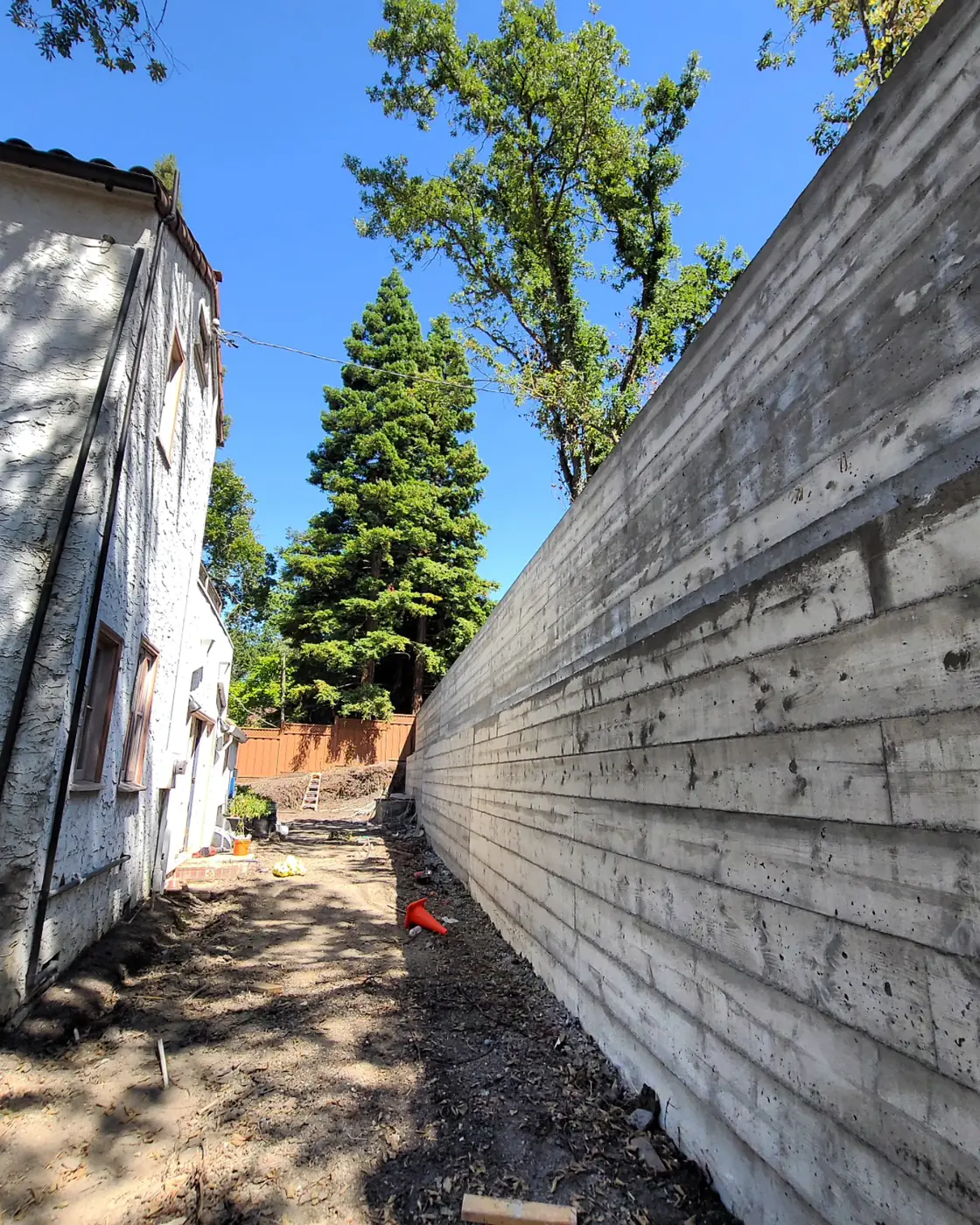
We also replaced a sound wall at Diablo Country Club. A wall like that is a structure: it needs a footing sized for the soil, reinforcement, and drainage behind it. Expansive clay pushes hard against a wall that cannot drain, and that pressure is the most common reason retaining walls fail.
Permits: town limits versus the county
This trips people up locally. If your address is inside Danville town limits, you permit through the Town of Danville Building Division. If you are in the unincorporated pockets nearby — Diablo, or Alamo just to the north — you permit through Contra Costa County instead, with different forms, fees and timelines.
Neighbors on either side of an invisible line can have quite different processes. We confirm which authority a job falls under before starting, and we cover the wider picture in our East Bay concrete permits guide.
What Danville calls us for
ADU foundations
Detached ADU slabs and foundations engineered for clay that moves seasonally. See foundations.
Driveways
Long residential driveways, turnarounds and aprons, jointed and reinforced for the soil. See concrete driveways.
Patios & outdoor living
Large patios, walkways, steps and landings — the flatwork that makes a big lot usable.
Retaining & sound walls
Engineered walls with proper drainage, from garden terracing to full sound walls. See retaining walls.
Danville projects
A sample of our Danville work — the jobs we have photographed, not all of them.
Sound Wall Replacement — Diablo Country Club
Danville, CA
Completed by New Edge Concrete in 2025 at Diablo Country Club in Danville, this project replaced the failing concrete retaining wall along the rear…
View projectDanville ADU Foundation
Danville, CA
A hillside ADU foundation in Danville, built by New Edge Concrete in 2024 with general contractor Burton Builders.
View projectDanville Landing Pad & Curb Drainage
Danville, CA
Finish concrete work for an ADU project in Danville, poured by New Edge Concrete in 2023.
View projectWhere we work in Danville
- Blackhawk
- Diablo
- Westside Danville
- Greenbrook
- Sycamore Valley
- Tassajara
- Old Town Danville
- Crow Canyon
- Alamo
- San Ramon
Danville questions
Why does concrete crack so much in Danville?
Expansive clay. The soil swells when it gets wet and shrinks when it dries, so the ground under a slab moves through the year — and it moves more at the edges than the middle. Base preparation, reinforcement, joint spacing and drainage are what control it.
Can you stop a new patio from cracking?
No one can promise concrete will never crack — it is a material that moves. Good work controls where it cracks, using joints cut at the right spacing, and prevents the structural cracking that comes from a bad base or missing reinforcement.
I live in Alamo, not Danville. Do you work there?
Yes — we have built an ADU foundation in Alamo. Worth knowing that Alamo is unincorporated, so it permits through Contra Costa County instead of the Town of Danville. That changes the paperwork, not the way we build.
How deep do footings need to be here?
Deeper than on stable soil, because they need to reach below the zone where the clay moves seasonally. The exact depth comes from the engineering for your site and the local building department, not from a rule of thumb. It is one reason we quote after walking the property.
Working on something in Danville?
We walk the site, measure it, and give you a free itemized estimate — no pressure, no guesswork off square footage.
Request an estimate