Berkeley is twenty minutes from our Richmond yard, and we are there constantly. Part of that is proximity and part of it is the housing stock: Berkeley is dense with homes built before 1940, and a great many of them are still sitting on their original foundations.
The work splits three ways here: foundations under old houses, slabs for backyard ADUs, and flatwork and sidewalks in the campus-adjacent blocks where we also do commercial and structural work for general contractors.
- Licensed C-8 · CSLB #1020281
- Twenty minutes from our Richmond yard
- Residential and commercial
Concrete in Berkeley, at a glance
- Permits
- City of Berkeley, through the Permit Service Center on Center Street. Foundation, structural and most retaining wall work is permitted and inspected.
- Seismic
- The Hayward Fault runs directly through Berkeley, beneath the eastern side of the city. A State-designated Alquist-Priolo zone crosses residential neighborhoods here.
- Ground
- Steep, slide-prone slopes in the Berkeley Hills; firmer alluvium mid-city; soft bay mud and fill in West Berkeley toward the waterfront.
- Housing stock
- Dense pre-1940 stock — brown shingles, craftsman bungalows and early flats — much of it on shallow unreinforced foundations over cripple walls.
Berkeley sits in Alameda County. Local facts last reviewed August 28, 2026.
Old houses, original foundations
A large share of Berkeley houses were built before reinforced concrete foundations were standard. What is under them is often a shallow, unreinforced or lightly reinforced footing, sometimes with poor aggregate, carrying a wood cripple wall that was never braced. It has held for a century under gravity alone. In an earthquake it is the weakest part of the house.
Foundation replacement is routine work for us, and the sequence is well established: shore or lift the house, remove the old foundation in controlled sections so the structure is never unsupported, form and pour a new reinforced foundation, then bolt the framing down to it properly. The new concrete is what you will see. The anchor bolting and the hold-downs are what actually tie the house down to it.
The signs that bring people to us are usually cracks that have opened over a season, doors that have stopped closing, a sloping floor, or a crawlspace where the concrete crumbles when you press it.
The Hayward Fault runs under Berkeley
The Hayward Fault trace runs through the eastern part of Berkeley, and the Alquist-Priolo Earthquake Fault Zone that follows it covers residential streets with houses on them. Within those zones, certain new construction triggers a required geological investigation before it can be permitted.
For a homeowner replacing a foundation or adding an ADU, this is worth knowing before you start paying for drawings, because it can change the design, the review and the schedule. If your project falls in the zone, we will tell you at the estimate — it is the kind of thing that is far cheaper to discover before design than during permitting.
Backyard ADUs, and getting concrete into them
Berkeley lots are deep and narrow, and the ADU usually goes at the back — behind the house, past a fence, down a side path a wheelbarrow can just about fit through. The engineering is ordinary. Getting the concrete back there is the hard part.
In practice that means pumping. We run a line pump down the side of the house, or boom over the roof where the side yard is impassable, and we form and reinforce by hand in a space too tight for machinery. Our Berkeley backyard detached ADU is a good example of the whole sequence.
The State has steadily loosened ADU rules, and a backyard unit is now one of the most common reasons a Berkeley homeowner calls a concrete contractor at all. See our foundations page for how we build them.
Campus-adjacent, commercial and structural work
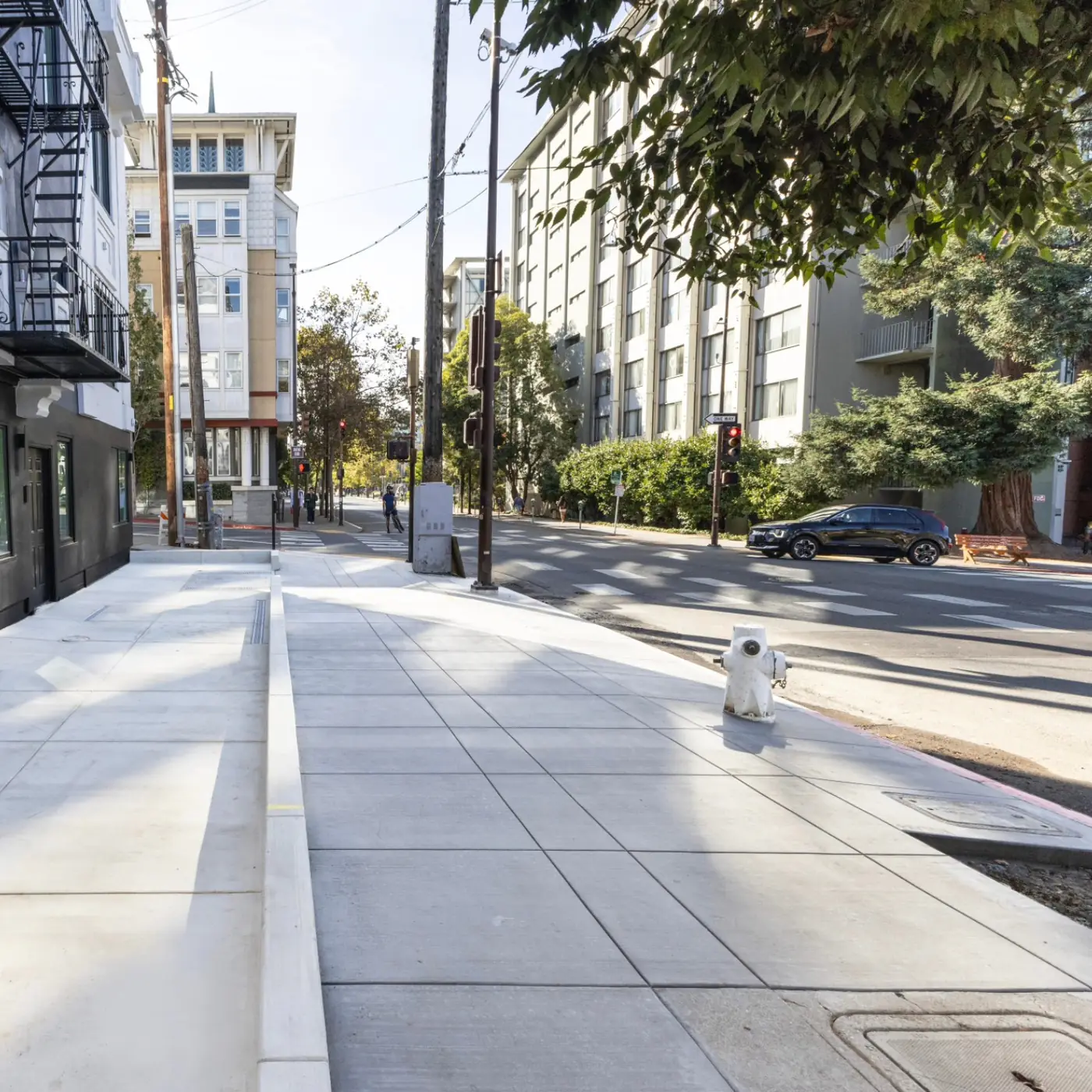
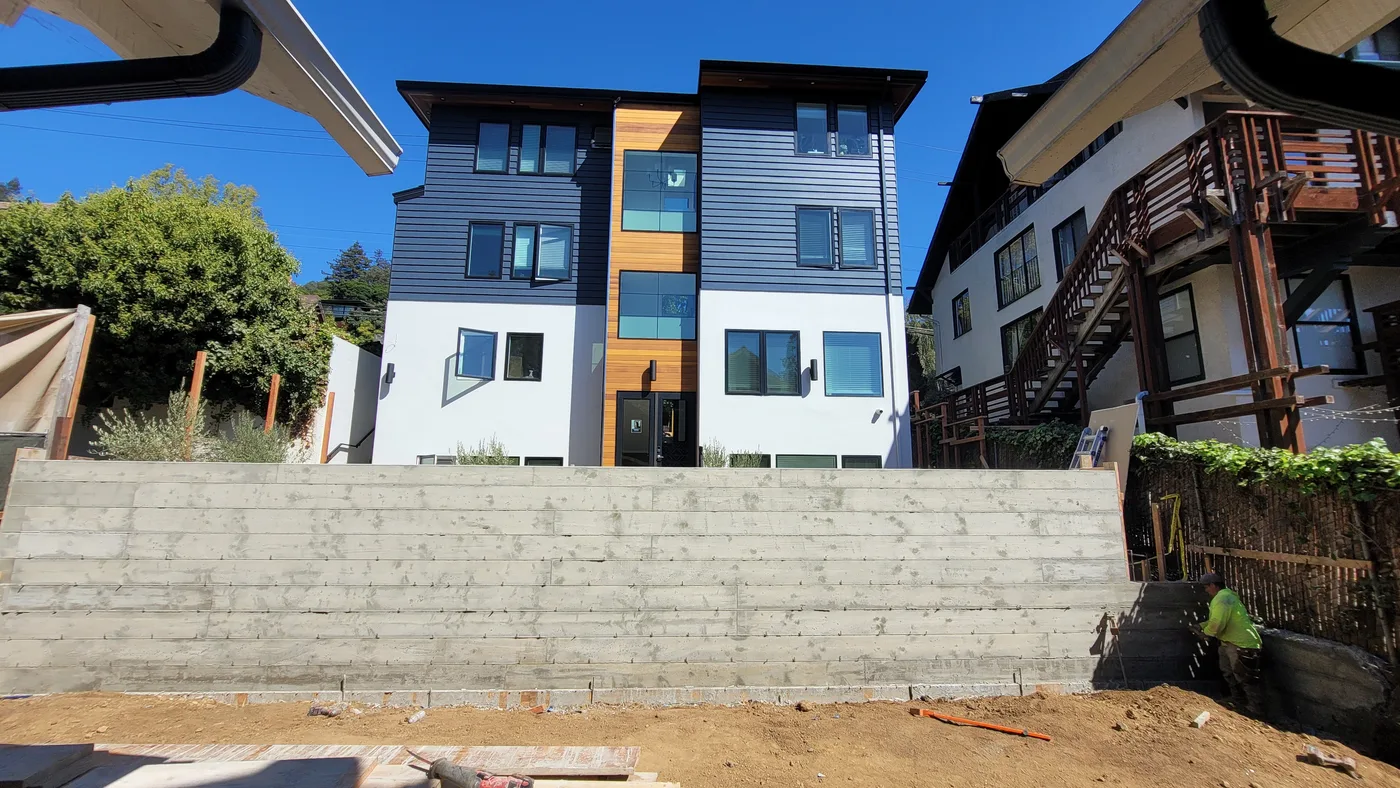
Not everything we pour in Berkeley is residential. We built the foundation for a student housing project here, and we replaced sidewalk and flatwork on Durant Avenue by the UC Berkeley campus — the kind of work that runs to a general contractor's schedule, with inspections, staging constraints and a pedestrian route to keep open.
That commercial side is a useful signal even for homeowners: the same crew, rebar detailing and inspection discipline that satisfies a structural engineer on a student housing pour is what goes under a backyard ADU.
Permits in Berkeley
Berkeley permits through its Permit Service Center, and the city runs its own review on top of the California Building Code. Foundation work, structural pours and retaining walls above the exempt height are permitted and inspected. Sidewalk work in the public right-of-way is a separate track from work on your own lot.
We handle permitting for the work we do where it is required. Our guide to concrete permits across East Bay cities covers what to expect city by city.
What Berkeley calls us for
Foundation replacement
New reinforced foundations under pre-war houses, with proper anchor bolting to the framing. See foundations.
ADU slabs & foundations
Backyard ADU foundations on tight lots, pumped in where access is too narrow for a truck.
Sidewalks & flatwork
Sidewalk replacement, ADA ramps and walkways, residential and commercial. See sidewalks & ADA ramps.
Retaining walls
Engineered walls with drainage for the hillside lots above campus. See retaining walls.
Berkeley projects
A sample of our Berkeley work — residential foundations and ADUs alongside commercial and campus-adjacent pours.
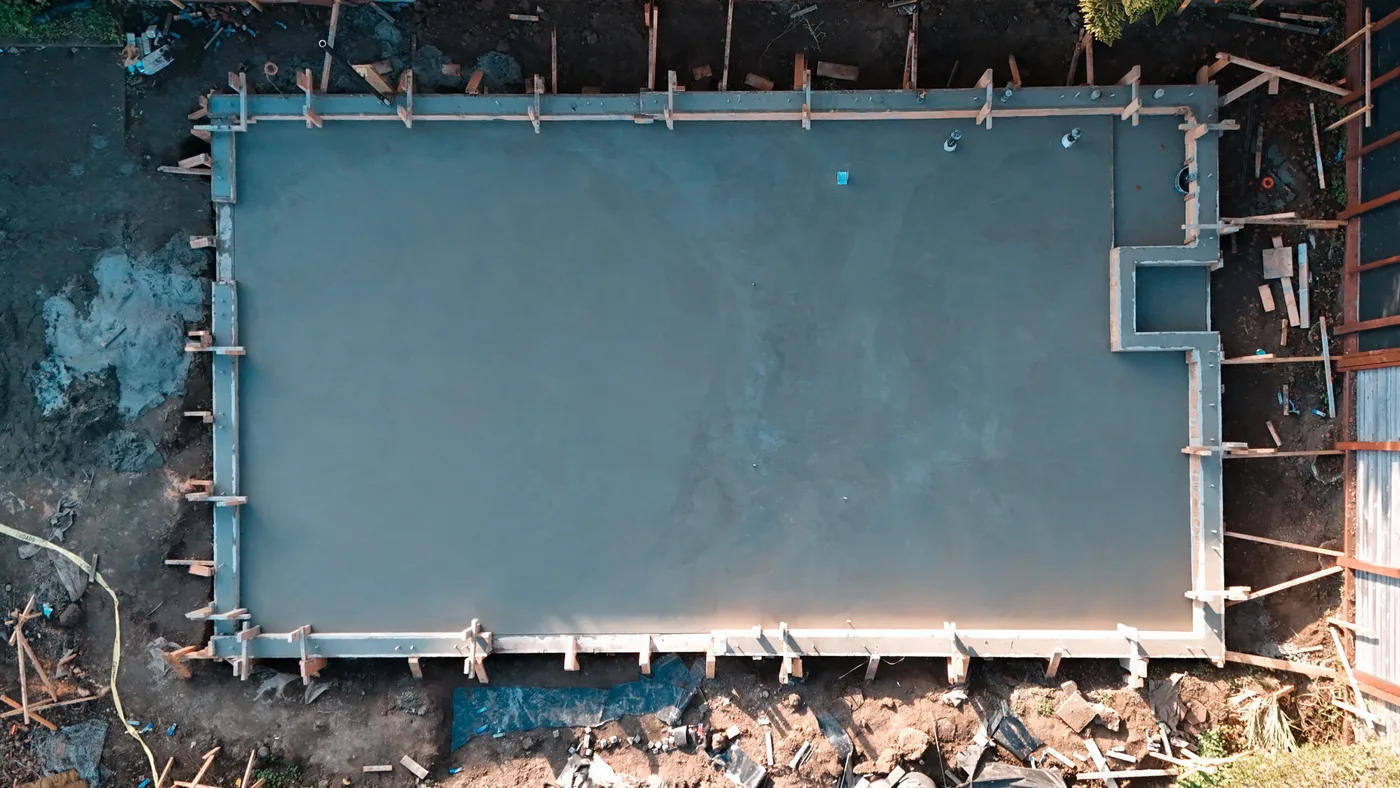
Berkeley Backyard Detached ADU
Berkeley, CA
New Edge Concrete built the foundation for this detached backyard ADU in Berkeley in 2026, working with general contractor GR Innovative Builders.
View projectDurant Sidewalk — UC Berkeley
Berkeley, CA
A public sidewalk replacement on Durant Avenue at UC Berkeley, built by New Edge Concrete in 2024 — a piece of public-space work that shows our…
View projectBerkeley Student Housing Foundation
Berkeley, CA
A major milestone for New Edge Concrete — our first foundation for a luxury student-housing development near UC Berkeley, steps from California…
View project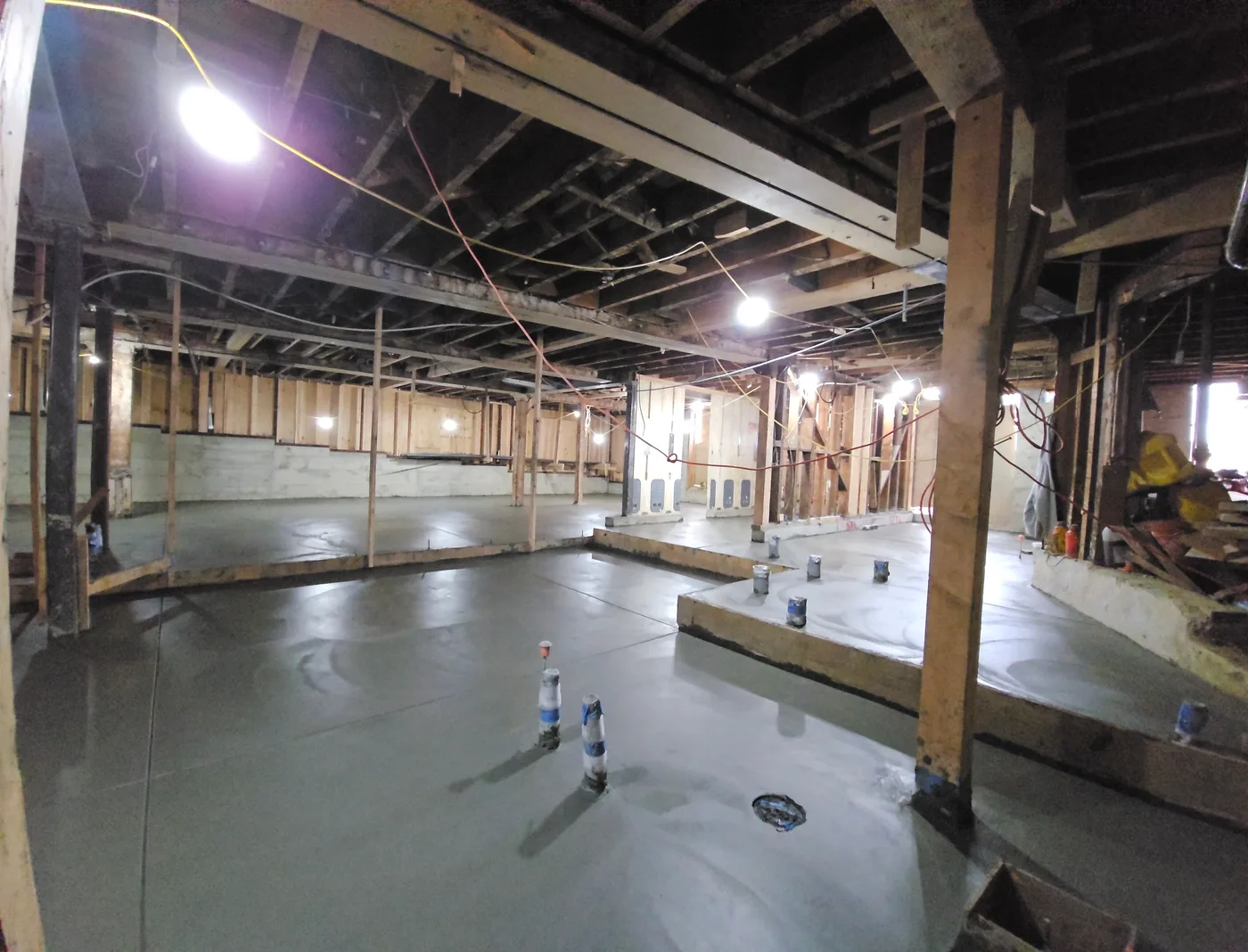
Durant Basement Foundation
Berkeley, CA
One of the biggest accomplishments in New Edge Concrete's history — a roughly $1 million foundation and seismic project at the corner of College and…
View projectWhere we work in Berkeley
- Elmwood
- Claremont
- Southside
- North Berkeley
- Berkeley Hills
- Thousand Oaks
- Westbrae
- West Berkeley
- Gourmet Ghetto
- Le Conte
- Panoramic Hill
Berkeley questions
How long does a foundation replacement take on a Berkeley house?
Most residential foundation replacements run a few weeks on site, depending on the size of the house, access, and whether the work is staged in sections. Concrete also needs curing time before it can be loaded, and that time is part of the schedule.
Can you get concrete into a backyard with no side access?
Usually yes, by pumping. A line pump runs a hose down a side path; a boom pump reaches over the house where there is no path at all. Both are normal on Berkeley lots and are priced into the estimate up front.
Is my property in the Alquist-Priolo fault zone?
The zone covers part of eastern Berkeley, and the State maintains the official maps. It is worth checking before you design an addition or ADU, because being inside the zone can require a geological report as part of permitting. We flag it when we see it at the estimate.
Do you do commercial concrete in Berkeley, or only houses?
Both. We have poured a student housing foundation and replaced sidewalk and flatwork by the UC campus, and we work as a structural concrete subcontractor for general contractors as well as directly for homeowners.
Working on something in Berkeley?
We walk the site, measure it, and give you a free itemized estimate — no pressure, no guesswork off square footage.
Request an estimate