Oakland is two cities as far as concrete is concerned, and the line between them runs roughly along the 580. Above it, you are on slopes: retaining walls, drilled piers, stepped foundations and driveways that have to hold a car on a grade. Below it, you are on flat alluvium and, near the estuary, on bay mud — and the questions change to drainage, base preparation and how much old slab has to come out.
We work on both sides of that line. It is a short drive from our Richmond yard, and we are in Oakland most weeks.
- Licensed C-8 · CSLB #1020281
- Hillside and flatland work
- Free on-site estimates
Concrete in Oakland, at a glance
- Permits
- City of Oakland, through the Planning & Building Department. Foundation work, retaining walls above the exempt height, and most structural pours are permitted and inspected.
- Seismic
- The Hayward Fault runs along the base of the Oakland hills, roughly parallel to the 580 corridor. Parts of the city sit inside a State-designated Alquist-Priolo fault zone.
- Ground
- Franciscan bedrock and steep, landslide-prone slopes in the hills; deep alluvium in the flats; soft bay mud and liquefiable fill toward the estuary and the airport.
- Housing stock
- Craftsman bungalows and Victorians from the early 1900s in the flats, and 1920s–1960s hillside homes above — plenty of both on foundations that predate modern reinforcement.
Oakland sits in Alameda County. Local facts last reviewed August 28, 2026.
The hills: access is the cost driver nobody quotes for
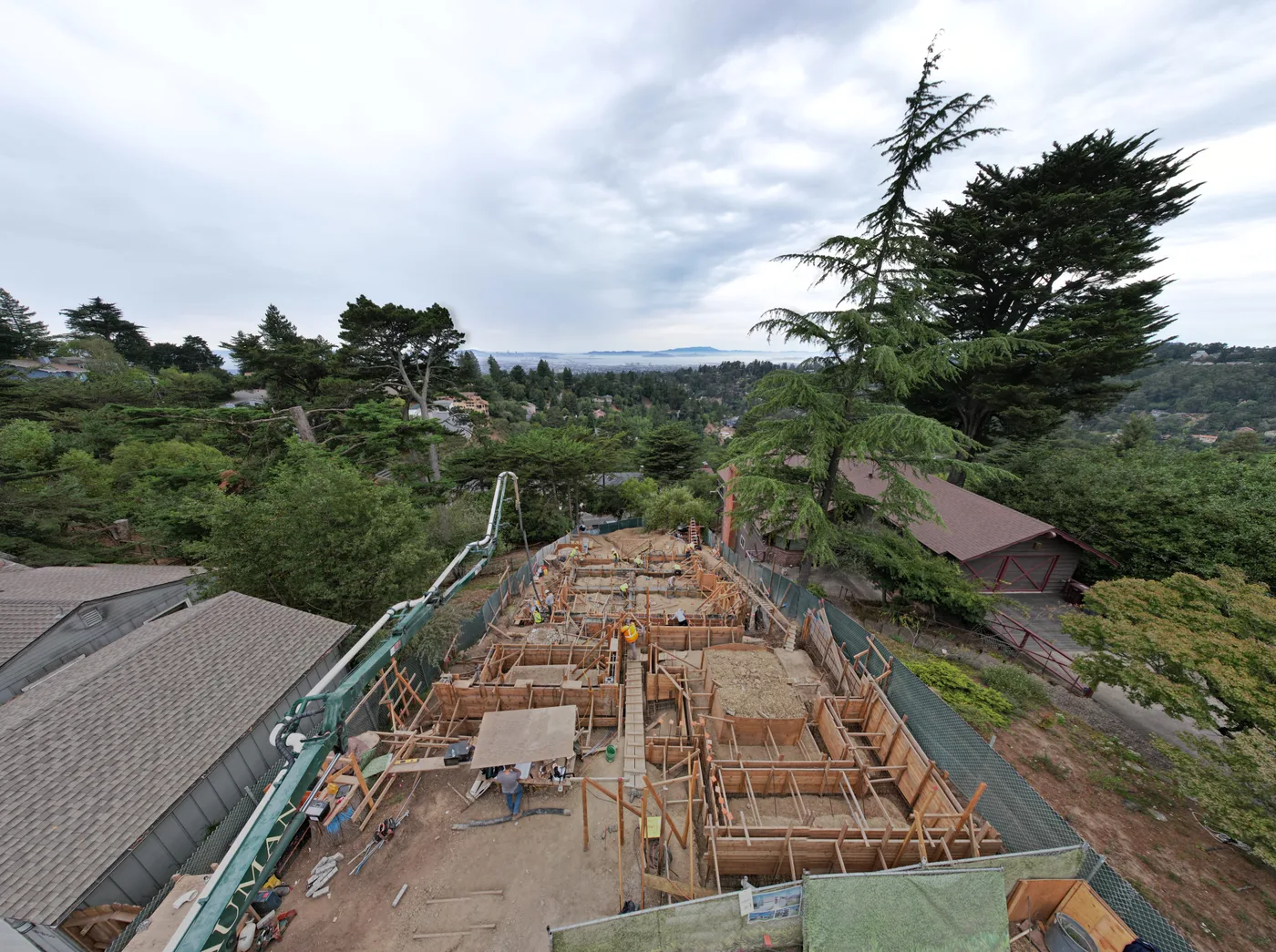
On a Montclair or Oakland Hills lot, the concrete itself is rarely the hard part. Getting it there is. Streets are narrow and steep, driveways are short, and a mixer truck often cannot get within a hose length of the pour. That means a pump — sometimes a boom pump reaching over the house, sometimes a line pump dragged down a hillside to a back garden.
A bid that leaves the pump out will look cheaper until the day of the pour. When we walk an Oakland hills site, access is the first thing we look at, because it sets the crew size, the equipment and the schedule. It is one of the biggest reasons two bids for the same job never match.
Slope also changes the structure. Hillside foundations here often want drilled piers and grade beams rather than a simple footing, and anything holding back a cut needs to be an engineered wall with real drainage behind it — not a stacked face that looks like a wall.
Building near the Hayward Fault
The Hayward Fault runs the length of the East Bay hills and passes directly through Oakland. Parts of the city fall inside an Alquist-Priolo Earthquake Fault Zone, which triggers a geological study requirement for certain new construction near the trace.
For most homeowners this does not come up as a fault question — it comes up as a foundation question. Older Oakland houses commonly sit on shallow, lightly reinforced footings with unbraced cripple walls above them, and that is the assembly that performs worst in a strong shake. When we replace a foundation, the rebar schedule, the anchor bolting and the connection to the framing are the parts that matter, not the surface you can see.
We cover the geology across the region in more depth in our guide to Bay Area soil, slopes and seismic conditions.
The flats: drainage, base, and what is under the old slab
Down the hill the ground flattens out and the problems change. West Oakland, Fruitvale and the areas toward the estuary sit on deep alluvium and, closer to the water, on soft bay mud and historic fill — ground that settles and, in a quake, can liquefy.
For flatwork the practical consequence is that the base matters more than the concrete. A driveway or patio poured on unprepared subgrade over soft ground will crack and settle no matter how good the mix was. We excavate, compact and build a base, and where the ground is bad we tell you before we pour.
Permits in Oakland
Structural concrete in Oakland is permitted work. Foundations, foundation replacement, and retaining walls over the exempt height need a permit and inspection, and hillside sites can pull in additional review. Flatwork replaced in kind — a driveway or patio on the same footprint — is usually simpler, but the answer depends on the specifics and on whether any drainage or grading changes.
We pull permits as part of the job where the work requires them. If you want the general picture first, we wrote a plain-English guide to concrete permits across East Bay cities.
What Oakland calls us for
Hillside foundations
Stepped foundations, drilled piers and grade beams for homes on grade — plus foundation replacement under older houses. See foundations.
Retaining walls
Engineered walls with drainage behind them, holding cuts and terracing hillside gardens. See retaining walls.
Driveways
Replacement driveways on grade, in plain broom finish or decorative color and score. See concrete driveways.
Patios & outdoor living
Terraces, steps, seat walls and landings that make a sloped Oakland garden usable.
Oakland projects
A sample of our Oakland work — the jobs we have photographed, not all of them.
Oakland Hills Custom Home
Oakland Hills, CA
New Edge Concrete handled the foundation and structural concrete on this custom luxury home in the Oakland hills — one of the most complex…
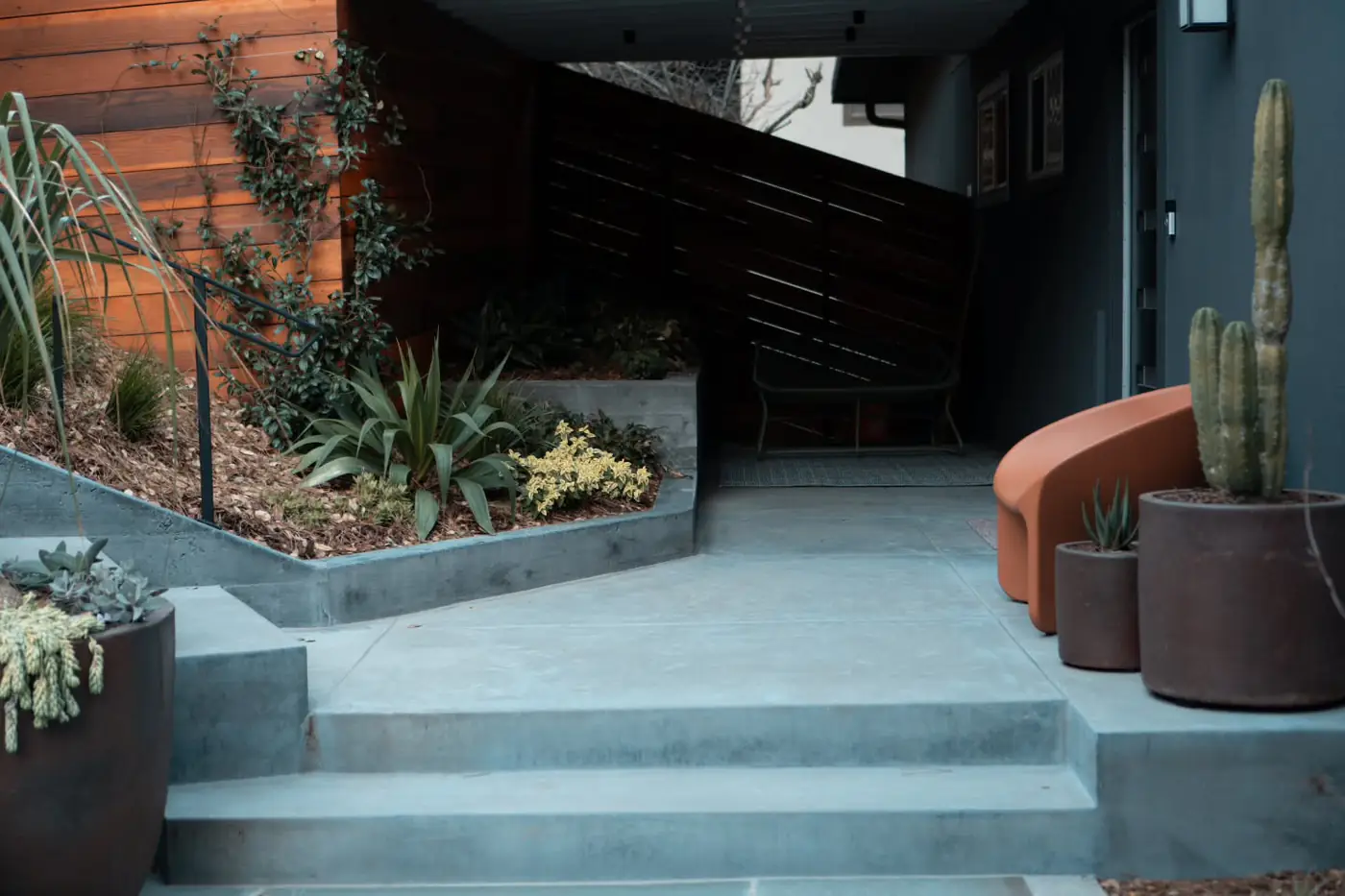
View projectHillside Outdoor Living Transformation
Oakland, CA
What started as raw hillside terrain is now a clean, modern, and functional outdoor layout.
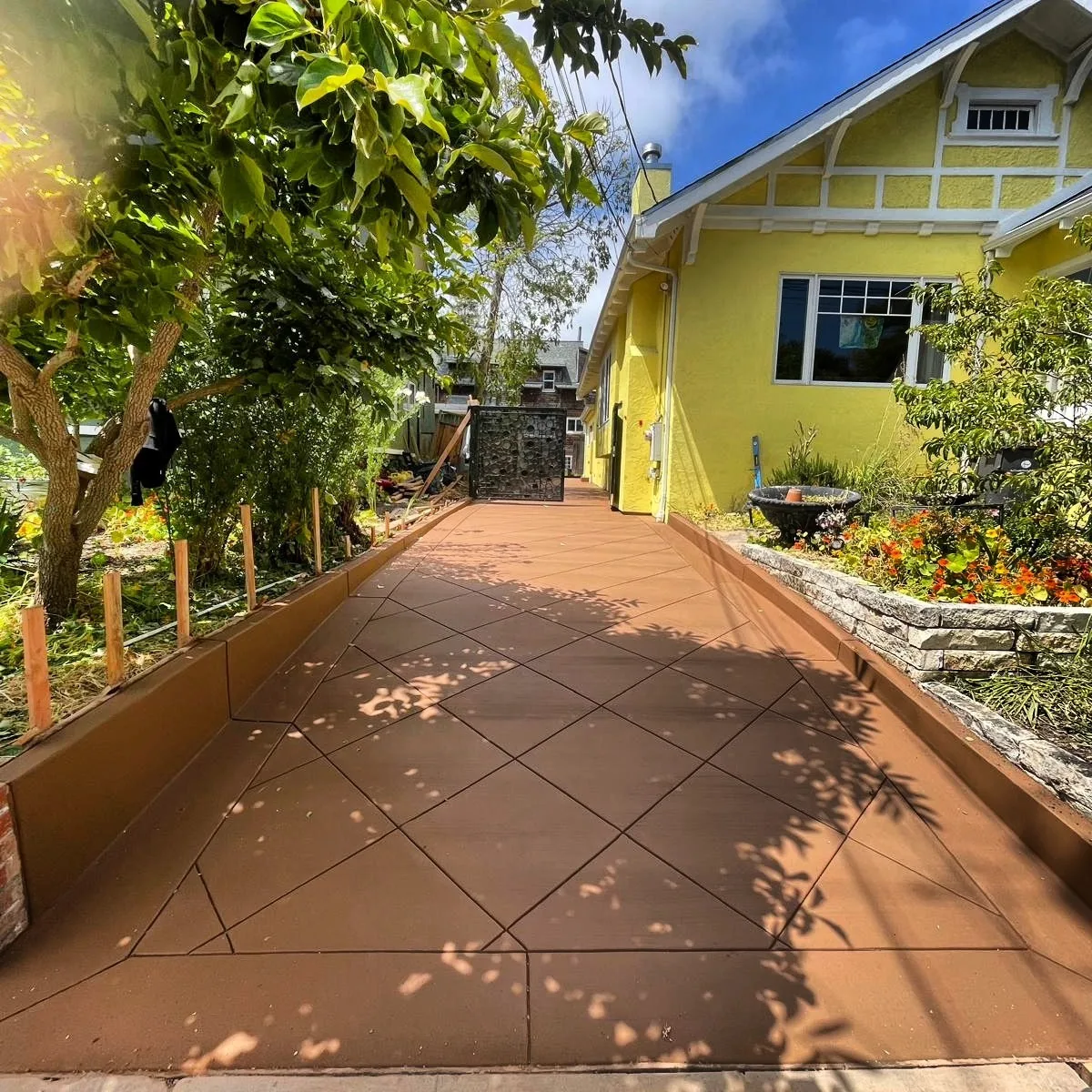
View projectOakland Gold Driveway & Patio
Oakland, CA
A decorative concrete driveway and side patio New Edge Concrete poured for an Oakland home in 2024, replacing the old plain gray driveway.
View projectWhere we work in Oakland
- Montclair
- Oakland Hills
- Rockridge
- Temescal
- Piedmont Avenue
- Grand Lake
- Glenview
- Dimond
- Laurel
- Fruitvale
- West Oakland
- Adams Point
Oakland questions
Do you work in the Oakland hills?
Regularly. Hillside work is a large share of what we do in Oakland — stepped foundations, drilled piers, retaining walls and terracing. Steep access usually means a pump, which we price into the estimate up front.
My Oakland house is from the 1920s and the foundation is crumbling. Can it be replaced?
Yes, and it is common work here. A house is lifted or shored, the old foundation is removed in sections, and a new reinforced foundation is poured and bolted to the framing. We walk the crawlspace before quoting, because what the concrete looks like from outside rarely tells the whole story.
Do I need a permit for a new driveway in Oakland?
Replacing a driveway on the same footprint is often straightforward, but anything that changes grade or drainage, or work in the public right-of-way at the sidewalk and curb, can need a permit. We tell you which category your job falls into before we start.
How far up the hills will a concrete truck get?
Less far than people expect. On narrow hill streets we usually pump rather than chute — a line pump for shorter runs, a boom pump where the pour is behind the house. That is a planned cost, not a surprise.
Working on something in Oakland?
We walk the site, measure it, and give you a free itemized estimate — no pressure, no guesswork off square footage.
Request an estimate